


Welcome back to The Work-Life Harmony Series. This five-part series is designed to help you build a harmonious personal and professional life, so you can feel fulfilled in life and successful at work.
In Part 1, I introduced this series and gave you an overview. We covered the pitfalls of “work-life balance” and why you should replace it with work-life harmony - which is not about balancing every area of your life equally, but instead about giving the right things, the right amount of time + energy, at the right time.
Today, I’ll take you through the key areas of life you’ll need to look at in order to build work-life harmony into your lifestyle.
Let’s dive in.
8 areas of life to harmonize
Work-life harmony arises when we’re dedicating the right mix of time, energy, and attention to the following eight areas of life: Work, Health + wellness, Recreation + fun, Relationships (both personal + professional), Physical environment, Finances, Personal growth, and Spirituality.
Let’s quickly break each of them down:
Work. Your career, business, or job. By the way, this isn’t only limited to work that brings in the moolah: if you’re a mother, your work is that of a caretaker. If you’re a homemaker, that’s work too. If you’re a student, your “work” is to educate yourself.
Health + wellness. Your general sense of health and wellbeing, including: physical exercise, nutrition, sleep, and stress management. When you don’t have this area in check, everything else suffers.
Recreation + fun. The stuff you do that brings you joy. Hobbies, sports, and things you do that energize you (without thinking about goals or being productive.)
Relationships (both personal + professional). The quality of the time and presence you give to your family, partner, friends and community.
Physical environment. The degree to which you’re satisfied with your surroundings: your home, the neighborhood you live in, your office or workspace.
Finances. Appropriately managing your resources so that money is a tool you leverage for the life you want to live, rather than a constant source of anxiety.
Personal growth. The time and energy you spend focused on improving yourself—learning new skills, reading, building or breaking habits, thinking about your values, goal-setting, etc.
Spirituality. The time and energy you dedicate towards a spiritual practice of some kind: religion, meditation, gratitude journaling, etc.
Harmony comes from the quality of time you invest, not the quantity of time you invest.
Once a week, my wife and I go on a nice, hourlong walk and talk. We both look forward to it because it energizes us, enriches our marriage, and gives us a chance to connect and chat without the children around.
Doing this everyday wouldn’t make sense and wouldn’t be sustainable.
Once a week, for one hour, is our harmony zone.
On the flip side, if I tried to get away with working for just one hour a week, everything would fall apart.
Bottom line: You don’t need to equally distribute your time across each of the eight areas to feel fulfilled in life and successful at work. You need to focus on quality of time invested, not quantity of time invested.
Actionable insights
Download and print out The Harmony Wheel worksheet below to gauge how satisfied you feel across the eight most important areas of your life: work, health + wellness, recreation, relationships, environment, finances, personal growth, and spirituality. Then, decide where to direct your time, energy, and attention for a more harmonious personal + professional life.
Here’s how to use it:
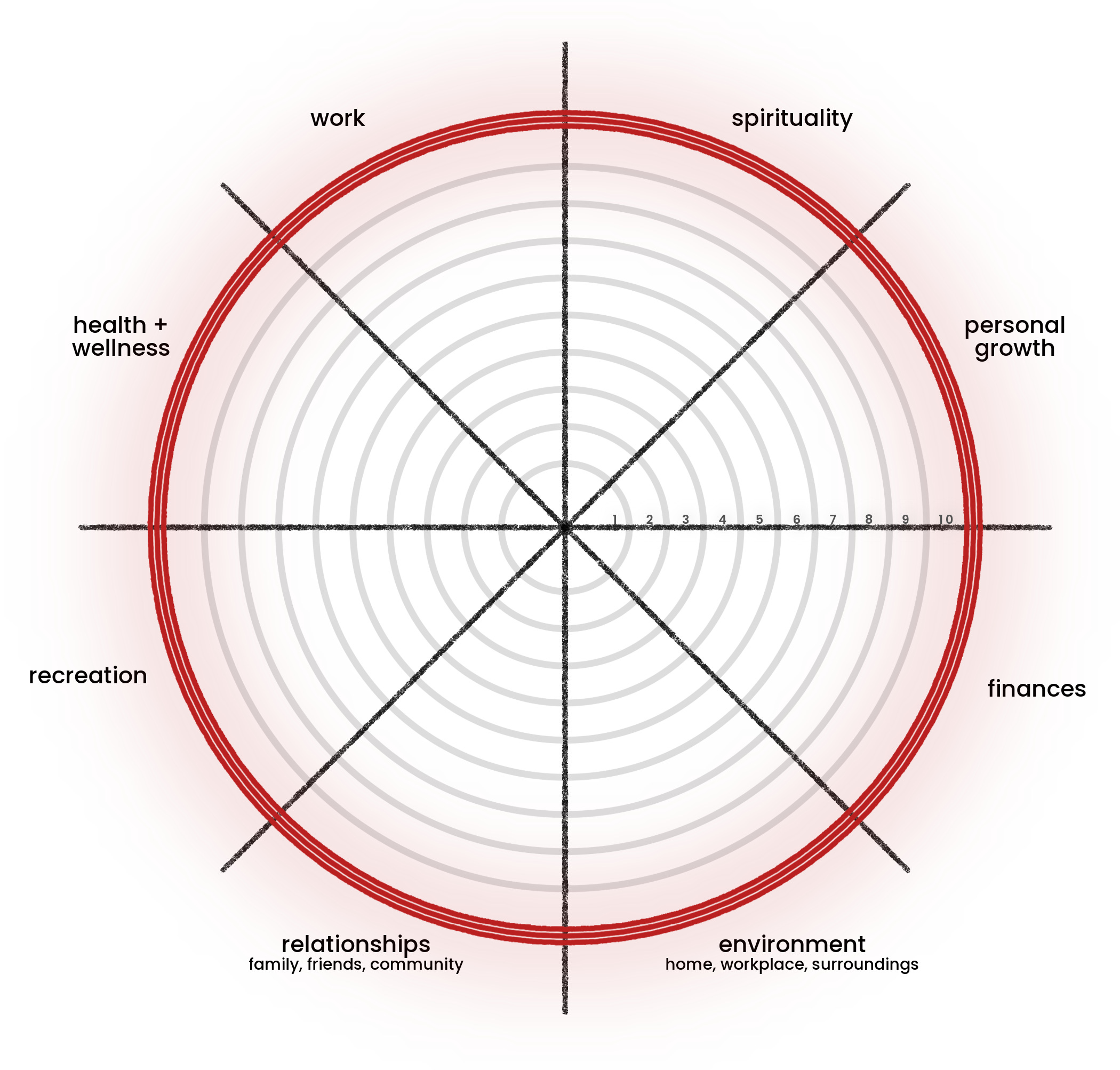
Rate each area from 1–10. Ask yourself: “How satisfied am I with this part of my life right now?” A score of 1 means very dissatisfied; 10 means very satisfied. Base your ratings on what matters to you in your current season of life.
Mark your ratings. Place a dot on the matching ring inside each section, as shown below. Lower scores sit closer to the center; higher scores sit closer to the outer edge.
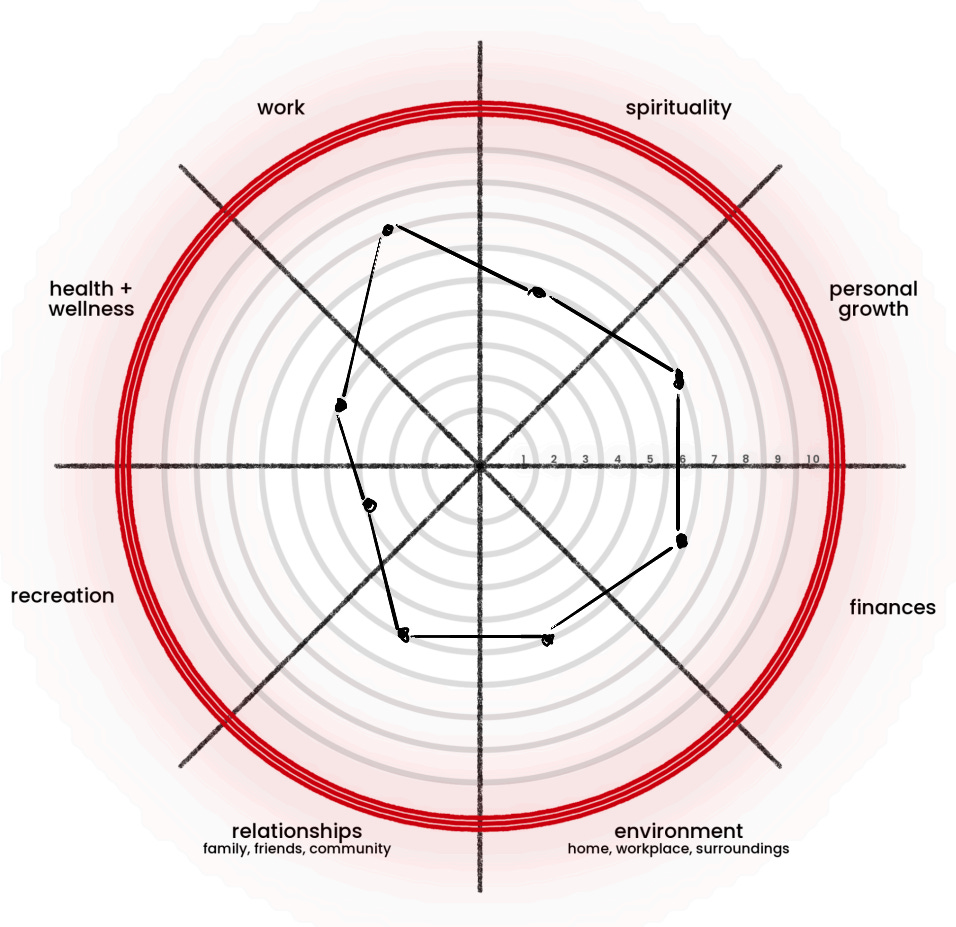
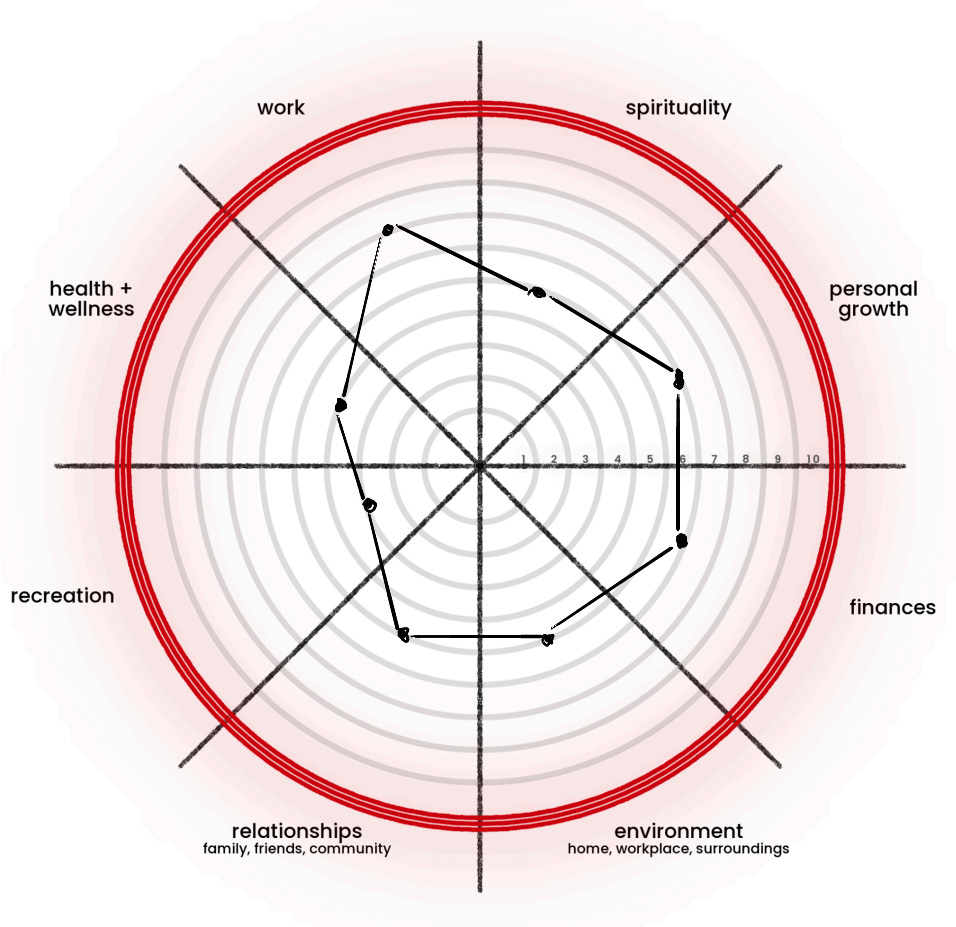
Connect the dots. Join neighboring dots around the wheel as shown in the image above. You can also shade the area inside your outline to make your results easier to see.
Harmonize. Which areas feel fulfilling? Which areas need more attention? Choose one area you want to focus on. Then, write down one small, specific action you can take to bring your lowest-scoring area of life into harmony. Focus on improving that area for thirty days.
Stay in harmony. Revisit your Harmony Wheel once a month to reflect on what’s changed, what you should maintain, and what needs more harmony.
Lastly, don’t forget: work-life harmony means giving the different parts of your life the attention they need in the season you’re in. It’s NOT about equally distributing time, it’s about appropriately distributing your time, energy + presence.


